
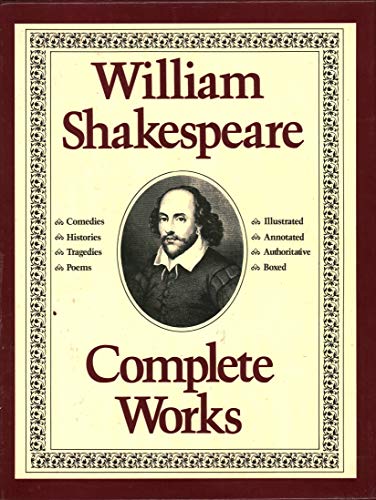
The Complete Works
William Shakespeare
Hamlet, Act I, Scene II
(A room of state in the castle.)
KING CLAUDIUS:
Though yet of Hamlet our dear brother's death
The memory be green, and that it us befitted
To bear our hearts in grief, and our whole kingdom
To be contracted in one brow of woe,
Yet so far hath discretion fought with nature
That we with wisest sorrow think on him,
Together with remembrance of ourselves.
Therefore our sometime sister, now our queen,
The imperial jointress to this warlike state,
Have we, as 'twere with a defeated joy,—
With an auspicious and a dropping eye,
With mirth in funeral and with dirge in marriage,
In equal scale weighing delight and dole,—
Taken to wife: nor have we herein barr’d
Your better wisdoms, which have freely gone
With this affair along. For all, our thanks.
Now follows, that you know, young Fortinbras,
Holding a weak supposal of our worth,
Or thinking by our late dear brother's death
Our state to be disjoint and out of frame,
Colleagued with this dream of his advantage,
He hath not fail’d to pester us with message,
Importing the surrender of those lands
Lost by his father, with all bonds of law,
To our most valiant brother. So much for him.
Now for ourself, and for this time of meeting:
Thus much the business is: we have here writ
To Norway, uncle of young Fortinbras,—
Who, impotent and bed-rid, scarcely hears
Of this his nephew's purpose,—to suppress
His further gait herein; in that the levies,
The lists, and full proportions, are all made
Out of his subject: and we here dispatch
You, good Cornelius, and you, Voltemand,
For bearers of this greeting to old Norway;
Giving to you no further personal power
To business with the king, more than the scope
Of these delated articles allow.
Farewell, and let your haste commend your duty.
CORNELIUS and VOLTEMAND:
In that and all things will we show our duty.
KING CLAUDIUS:
We doubt it nothing: heartily farewell.
(Exeunt VOLTEMAND and CORNELIUS.)
Hamlet, Act III, Scene I
(The famous "To be or not to be" soliloquy.)
HAMLET:
To be, or not to be: that is the question:
Whether 'tis nobler in the mind to suffer
The slings and arrows of outrageous fortune,
Or to take arms against a sea of troubles,
And by opposing end them? To die: to sleep;
No more; and by a sleep to say we end
The heart-ache and the thousand natural shocks
That flesh is heir to, 'tis a consummation
Devoutly to be wish'd. To die, to sleep;
To sleep: perchance to dream: ay, there's the rub;
For in that sleep of death what dreams may come
When we have shuffled off this mortal coil,
Must give us pause: there's the respect
That makes calamity of so long life;
For who would bear the whips and scorns of time,
The oppressor's wrong, the proud man's contumely,
The pangs of despised love, the law's delay,
The insolence of office and the spurns
That patient merit of the unworthy takes,
When he himself might his quietus make
With a bare bodkin? who would fardels bear,
To grunt and sweat under a weary life,
But that the dread of something after death,
The undiscovered country from whose bourn
No traveller returns, puzzles the will
And makes us rather bear those ills we have
Than fly to others that we know not of?
Thus conscience does make cowards of us all;
And thus the native hue of resolution
Is sicklied o'er with the pale cast of thought,
And enterprises of great pith and moment
With this regard their currents turn awry,
And lose the name of action.—Soft you now!
The fair Ophelia! Nymph, in thy orisons
Be all my sins remember'd.
Hamlet, Act I, Scene V
(The Ghost reveals the truth to Hamlet.)
GHOST:
I am thy father's spirit,
Doom'd for a certain term to walk the night,
And for the day confined to fast in fires,
Till the foul crimes done in my days of nature
Are burnt and purged away. But that I am forbid
To tell the secrets of my prison-house,
I could a tale unfold whose lightest word
Would harrow up thy soul, freeze thy young blood,
Make thy two eyes, like stars, start from their spheres,
Thy knotted and combined locks to part,
And each particular hair to stand on end,
Like quills upon the fretful porcupine:
But this eternal blazon must not be
To ears of flesh and blood. List, list, O, list!
If thou didst ever thy dear father love—
HAMLET:
O God!
GHOST:
Revenge his foul and most unnatural murder.
HAMLET:
Murder!
GHOST:
Murder most foul, as in the best it is;
But this most foul, strange, and unnatural.
HAMLET:
Haste me to know't, that I, with wings as swift
As meditation or the thoughts of love,
May sweep to my revenge.
GHOST:
I find thee apt;
And duller shouldst thou be than the fat weed
That roots itself in ease on Lethe wharf,
Wouldst thou not stir in this. Now, Hamlet, hear:
'Tis given out that, sleeping in my orchard,
A serpent stung me; so the whole ear of Denmark
Is by a forged process of my death
Rankly abused: but know, thou noble youth,
The serpent that did sting thy father's life
Now wears his crown.
HAMLET:
O my prophetic soul! My uncle!
GHOST:
Ay, that incestuous, that adulterate beast,
With witchcraft of his wit, with traitorous gifts,—
O wicked wit and gifts, that have the power
So to seduce!—won to his shameful lust
The will of my most seeming-virtuous queen:
O Hamlet, what a falling-off was there!
From me, whose love was of that dignity
That it went hand in hand even with the vow
I made to her in marriage, and to decline
Upon a wretch whose natural gifts were poor
To those of mine! But virtue, as it never will be moved,
Though lewdness court it in a shape of heaven,
So lust, though to a radiant angel link'd,
Will sate itself in a celestial bed,
And prey on garbage. But, soft! methinks I scent the morning air;
Brief let me be. Sleeping within my orchard,
My custom always of the afternoon,
Upon my secure hour thy uncle stole,
With juice of cursed hebenon in a vial,
And in the porches of my ears did pour
The leperous distilment; whose effect
Holds such an enmity with blood of man
That swift as quicksilver it courses through
The natural gates and alleys of the body,
And with a sudden vigour it doth posset
And curd, like eager droppings into milk,
The thin and wholesome blood: so did it mine;
And a most instant tetter bark'd about,
Most lazar-like, with vile and loathsome crust,
All my smooth body.
Hamlet, Act III, Scene II
(Hamlet prepares for "The Mousetrap" play.)
HAMLET:
Speak the speech, I pray you, as I pronounced it to you,
trippingly on the tongue: but if you mouth it, as many of
your players do, I had as lief the town-crier spoke my lines.
Nor do not saw the air too much with your hand, thus, but
use all gently; for in the very torrent, tempest, and, as I may
say, whirlwind of your passion, you must acquire and beget
a temperance that may give it smoothness. O, it offends me
to the soul to hear a robustious periwig-pated fellow tear
a passion to tatters, to very rags, to split the ears of the
groundlings, who for the most part are capable of nothing
but inexplicable dumb-shows and noise: I would have such a
fellow whipped for o'erdoing Termagant; it out-herods Herod:
pray you, avoid it.
FIRST PLAYER:
I warrant your honour.
HAMLET:
Be not too tame neither, but let your own discretion
be your tutor: suit the action to the word, the word to
the action; with this special observance, that you o'erstep
not the modesty of nature: for anything so overdone is
from the purpose of playing, whose end, both at the first and
now, was and is, to hold, as 'twere, the mirror up to nature;
to show virtue her own feature, scorn her own image, and
the very age and body of the time his form and pressure.
Now this overdone, or come tardy off, though it make the
unskilful laugh, cannot but make the judicious grieve; the
censure of the which one must in your allowance o'erweigh
a whole theatre of others.




